Stepping into Singapore’s vibrant dining scene means competing in one of the most dynamic food destinations in the world. From bustling hawker centres and neighbourhood cafes to upscale restaurants, attracting diners involves more than just the aroma of food. Your shopfront is your first point of contact with potential customers, making F&B signage planning an important step in setting your business up for success in Singapore.
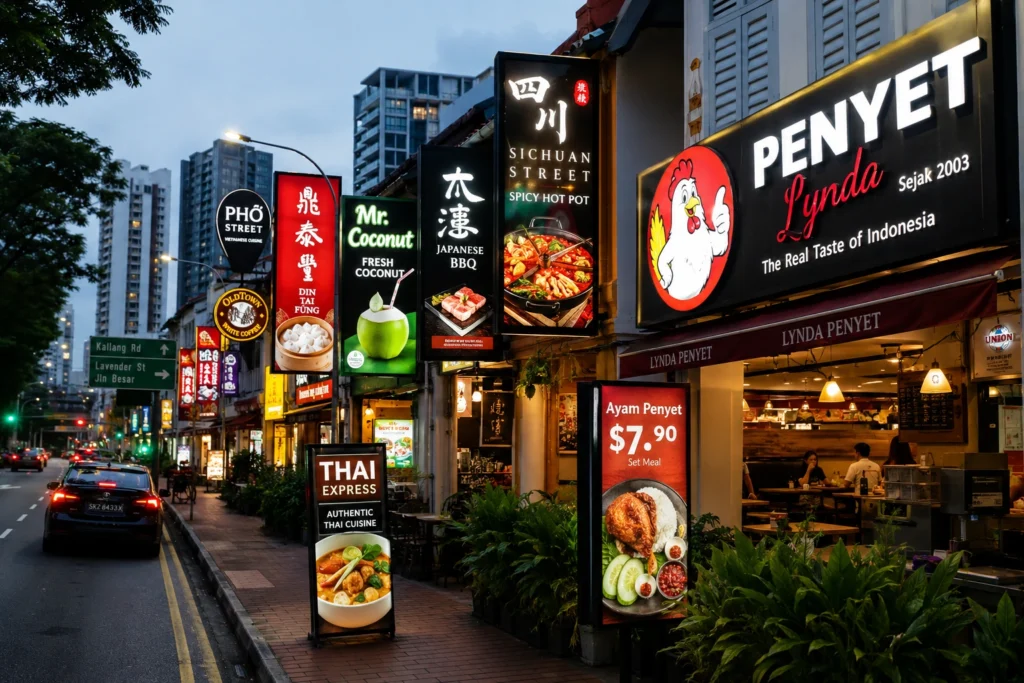
A well designed storefront display is like a silent salesperson serving you around the clock. If you want to know how to design restaurant signage that attracts customers, here are five factors every F&B owner should consider before starting their sign design journey.
-
Prioritize Clean Readability and Typography
When passersby walk or drive past your shop, you only have a split second to capture their attention. A beautiful design is completely useless if potential customers cannot read it quickly. A common rule of thumb for signage typography is that every 1 cm of letter height provides roughly 1.2 metres of legibility distance. However, larger lettering may be needed when the sign needs to attract attention from further away.
-
Indoor Corridors & Malls (3m viewing distance): Aim for a minimum letter height of 2.5 cm.
-
Pedestrian Sidewalks (10m viewing distance): Aim for a minimum letter height of 8 cm.
-
Across the Street (25m viewing distance): Aim for a minimum letter height of 20 cm.
-
Passing Road Traffic (50m viewing distance): Aim for a minimum letter height of 40 cm.
-
High Colour Contrast and Strategic Tones
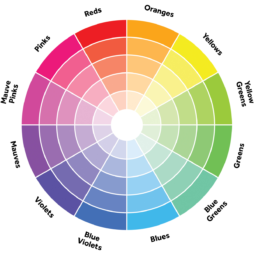
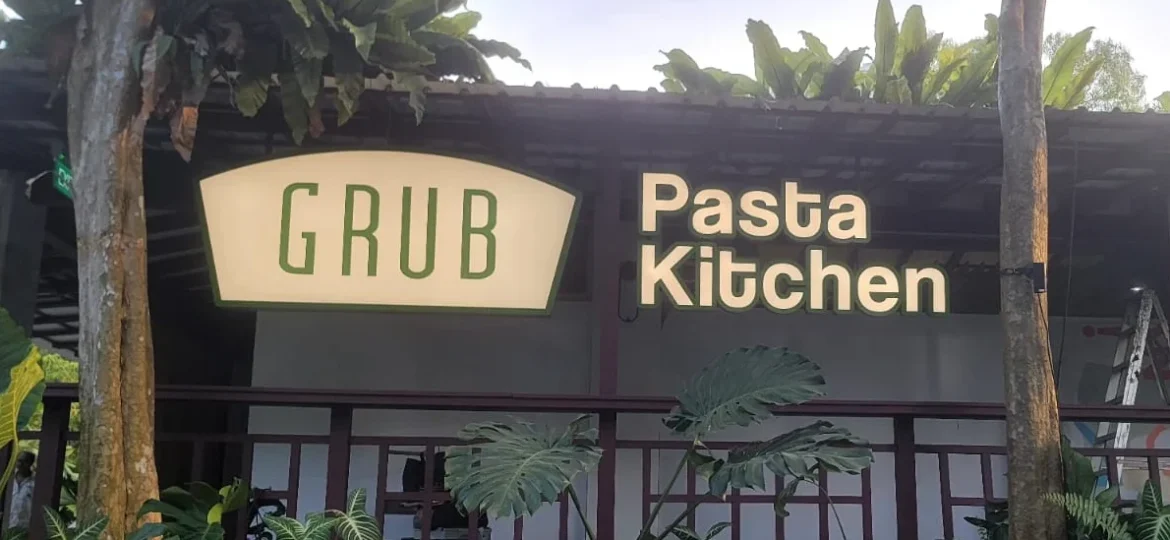
Colour contrast is important for the visibility of signage. Low-contrast combinations, such as light grey lettering on a white background, will blend into the background, especially in dim lighting. Choosing a high-contrast combination, like dark text with a light background or light text on a dark background, ensures your information remains legible from a distance.
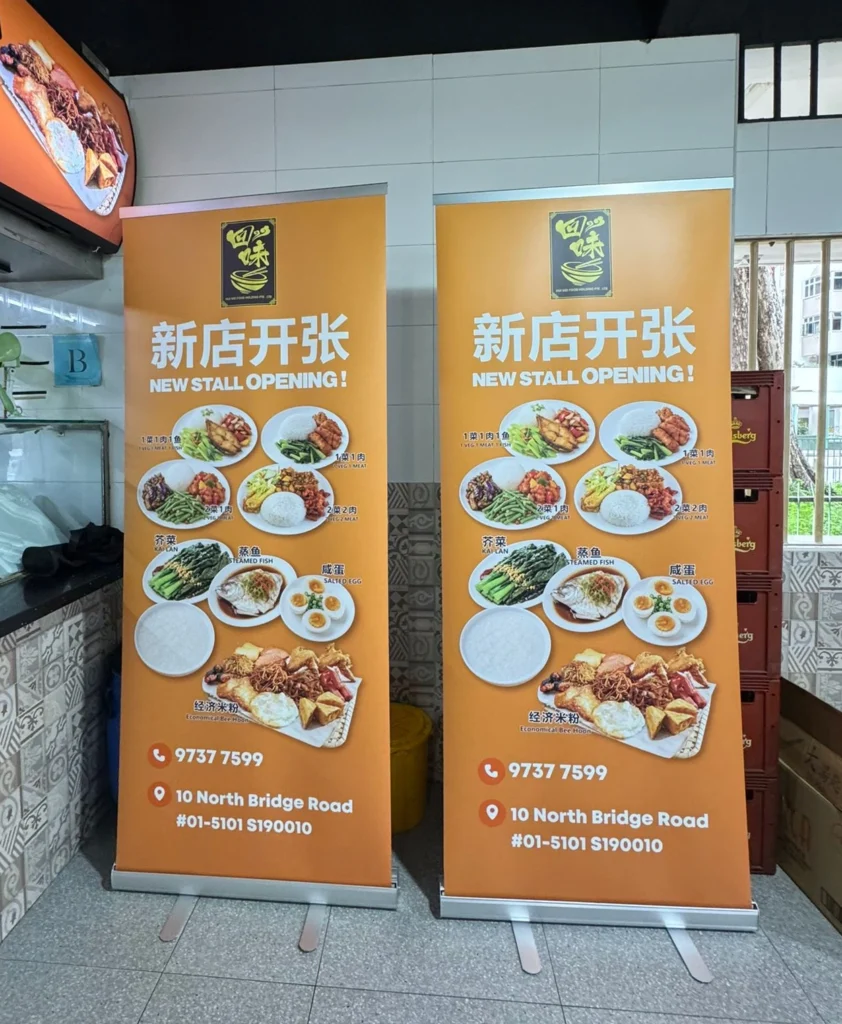
Unlike permanent building signs, such as 3D logos or lightboxes, roll-up banner stands are a flexible, temporary marketing tool. They allow F&B vendors to display special opening menus, set meal promotions, or contact details at foot-traffic level without requiring fixed structural installations. High-resolution printing ensures every food photo is clear, vibrant, and appetising, helping attract the attention of passersby.
-
60 × 160 cm: A compact size suitable for tight indoor corridors or placement beside dining tables without obstructing walkway traffic.
-
80 × 200 cm: A popular size that provides a balance of footprint and visibility for shopfront promotions.
-
120 × 200 cm / 150 × 200 cm: Larger displays with weighted bases, suitable for trade shows, major exhibitions, or grand openings where greater visibility is needed.
-
Ensure Bright Illumination Day and Night
Singapore’s dining culture thrives late into the night. If your shopfront goes dark after sunset, you’ll miss out on peak dinner and late-night hours. Proper lighting keeps your storefront visible and inviting at all hours.
-
Ingress Protection (IP Ratings): Outdoor or semi outdoor displays may require higher IP ratings, such as IP65, to provide protection against water and dust. Standard indoor displays may use lower IP ratings, depending on the installation environment.
-
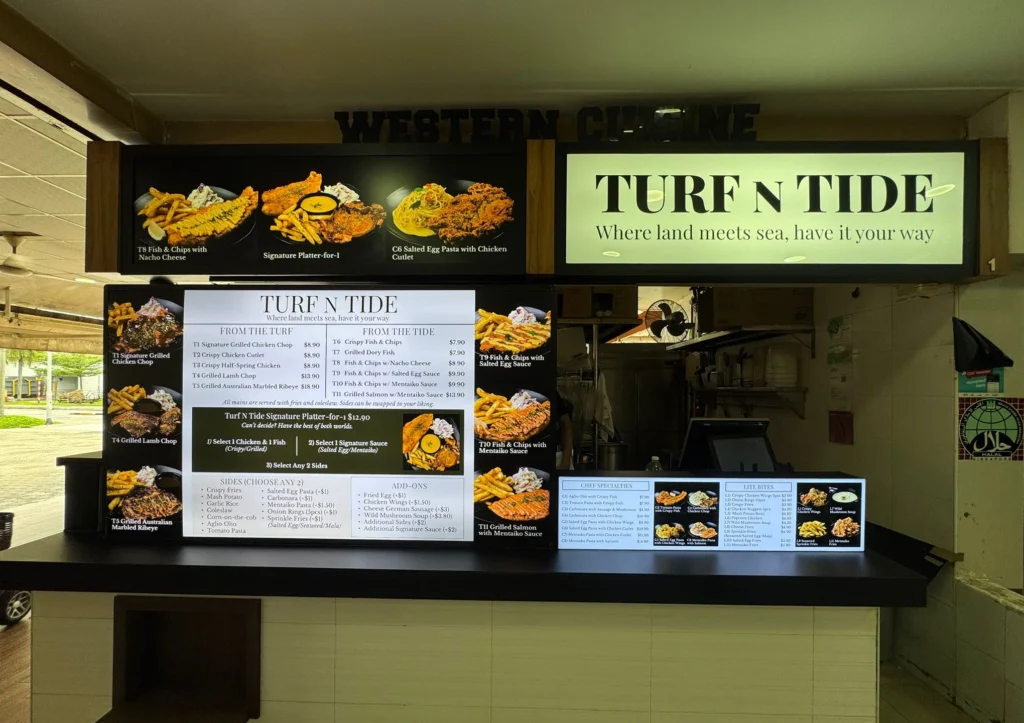
Brightness Range (Nits / cd/m²): Indoor signage generally requires less brightness than outdoor displays. Displays exposed to direct sunlight may require higher brightness levels to remain clearly visible without appearing washed out.
-
Colour Temperature: Daylight white around 6500K can provide a crisp appearance, while warmer 3000K tones can create a cosy atmosphere for bistros and other dining concepts.
-
Align Design with Brand Identity and Strategic Placement
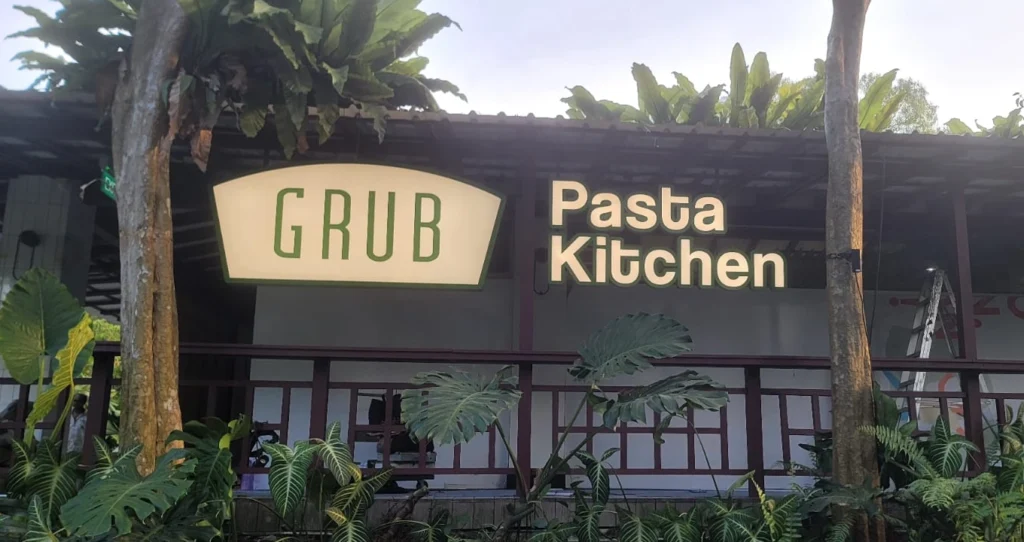
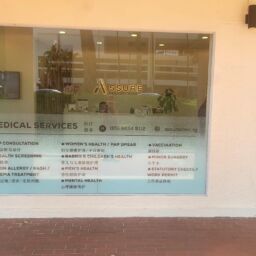
Strategic positioning is just as important as the design itself. Install the main display at clear eye level near the main entrance or along a street-facing pillar. You can also maximise neighbourhood foot traffic from multiple angles by using durable pillar wrap or clean window advertising alongside your primary shopfront layout.
-
Plan for Ongoing Maintenance and Upkeep
Improve Your Shopfront Display
Frequently Asked Questions (FAQs)
-
What Type of Signage Suits My Restaurant?
-
Street-facingshophouse, trades into the evening → Illuminated 3D boxup signage or lightbox signage
-
Indoor mall unit → Evenly lit lightbox signage, subject to the mall’s signage requirements
-
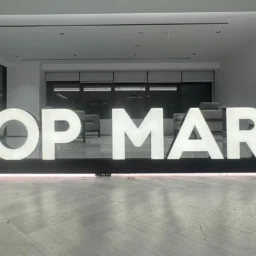
Daytime-only cafe with strong natural light → 3D acrylic lettering with spotlights
-
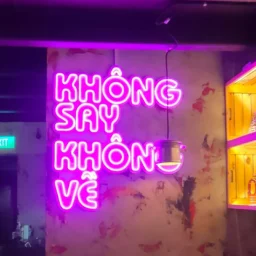
Bar or late-night concept → Neon signage or LED neon as a feature element
-
How Large Should Restaurant Signage Lettering Be?
-
How Bright Does Restaurant Signage Need to Be in Singapore?
-
How Long Does Restaurant Signage Last and What Maintenance Does It Need?
-
How Much Does Restaurant Signage Cost in Singapore?
-
What Signage Is Best for a Restaurant Operating at Night?
-
What Signage Size Is Suitable for a Restaurant Shopfront?
-
How Can I Get a Quote for Restaurant Signage in Singapore?